
The morning on which I’m writing, of January 22, 2025, is the 52nd anniversary, if that is still the appropriate word, of the issuance of the United States Supreme Court opinion in the case Roe v. Wade (1973). It is also, of course, Day 3 of the second Trump Administration, as the once and current President does and does not take credit for the overturning of Roe in the Court’s opinion in Dobbs v. Jackson Women’s Health (2022). And it is two days since the death, from brain cancer, at age 67, of the longtime head of the Planned Parenthood Federation of America, Cecile Richards.
Richards wrote a book when she stepped down from Planned Parenthood, which I bought for my partner, who is a “trouble-maker” and change maker of the best kind, as an anti-hunger/anti-poverty advocate and activist in our region. Richards was a good person to “think with,” as one of my graduate mentors would put it, about making change because, although she headed a fairly mainstream organization and brought to it some of the tools of corporate America, like effective branding and narrowness and consistency of mission, she also understood that it was all in service of something quite non-mainstream in the context of Western history, people’s autonomy and control over their own bodies, using contemporary medical knowledge to support us all in enhancing freedom in our reproductive and sexual lives.
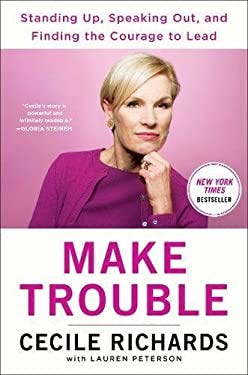
Richards, whom I never met but during the time of whose leadership I was the member of a Planned Parenthood board (the nonprofit board of directors of Planned Parenthood of Northern New England, https://www.plannedparenthood.org/planned-parenthood-northern-new-england, as well as the nonprofit advocacy board of the Planned Parenthood of Vermont Action Fund), was the person who put the bright pink in Planned Parenthood — identifying the group not, as abortion and everything about women’s reproductive and sexual health had been in the 19th- and early-20th-century past, with shadows, dark alleyways, and the aura of shame, but with something bright, public, self-determined, and (awkwardly, for me) traditionally feminine. She and her team unapologetically reinterpreted the ultimate “girly” tone, marginalized by feminists and their antagonists both, and insisted that it mean something else — after “Legally Blonde” but years before “Barbie” did similar work.

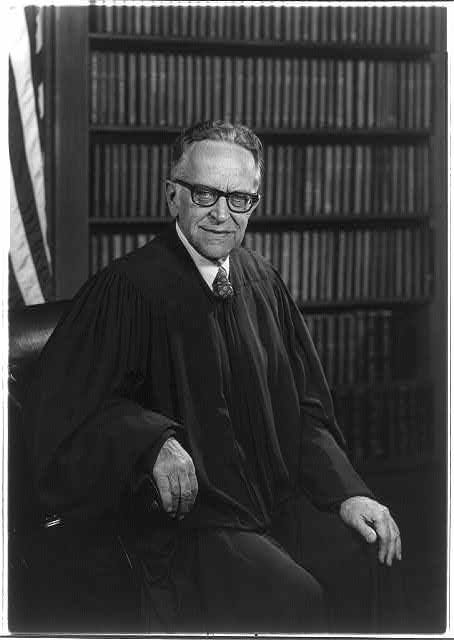
I’m not sure that any of that is what the Supreme Court majority had in mind when they voted, 7-2, to undo 100-150 years (depending on the state) of state laws that forbade or harshy regulated access to abortion. However, from reading the archival papers of Justice Harry Blackmun, who authored the opinion, I can say with a fair degree of confidence that the Justices were trying to take the sting and bitter controversy out of the issue, to settle the question as best they could by finding a kind of middle ground that might not satisfy all parties but would at least do the work of respecting the genuine differences among people and groups of people around this issue.
In drafting the opinion, Justice Blackmun relied, as he had been doing since the young feminist attorneys Sarah Weddington, from Texas, and Margie Pitts Hames, from Georgia, argued the case at the Supreme Court lectern, on the library of the Mayo Clinic, for which he had worked for nearly a decade.[1] He reviewed material on medical attitudes and practices. As journalist Jeffrey Toobin once pointed out, Blackmun mentioned physicians forty-eight times in the opinion and used the word “woman” forty-four times.[2]
One aspect of the research that particularly interested Justice Blackmun was a review of the policies of the American Medical Association (AMA) vis-à-vis abortion.[3] The group’s most important policy statement was its most recent: After a concerted effort to change AMA policy, which included civil disobedience disruptions by members of New Yorkers for Abortion Law Repeal and the National Association for the Repeal of Abortion Laws (now, the group Reproductive Freedom for All: https://reproductivefreedomforall.org )
Advocates for abortion decriminalization scored a near-triumph in 1970. “For the first time in its 123-year history,” the AMA’s governing body ruled that it was medically ethical for doctors to perform abortions for a wide range of reasons. This policy included a hospital requirement and a standard that any doctor seeking to perform an abortion call in two colleagues for consultation, and so it was more restrictive than the laws of Hawaii, New York, and Alaska. But it was more liberal than the laws in forty-seven U.S. states. It arrived only three years after the AMA broke from one hundred years of endorsing the tightest feasible abortion restrictions, to endorse a reform approach that found abortion acceptable in case of dangers to a mother’s physical or mental health, the potential deformity of her fetus, rape, or incest.[4]
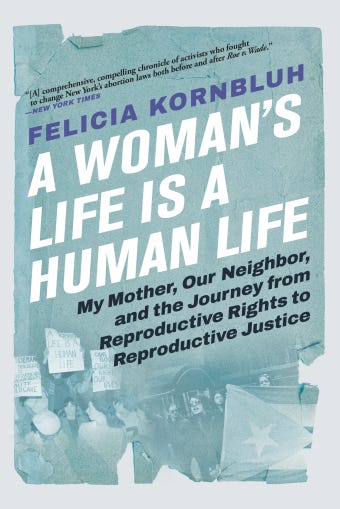
The rapid change in AMA policy was in large measure a result of grassroots pressure, especially coming from New York City and New York State — as I argue in my big book on the history of reproductive rights (from which I draw this whole discussion)
The AMA was the most important professional organization whose policies Justice Blackmun reviewed in considering how the Supreme Court should intervene in the roiling politics of abortion. But it was not the only such organization or the only one whose policies shifted in response to grassroots efforts to change the law, especially in New York. The American Public Health Association (APHA), for example, came out for repeal in 1968 and issued a set of Standards for Abortion Services in October, 1970, which were cited at length in Roe.[8]
The American Bar Association (ABA), which liberalized its stance toward abortion in 1972, was not a medical organization. However, it was the most prominent national voice of the profession in which Supreme Court Justices participated. Justice Powell, one of the new appointees of President Nixon who advocates feared would vote with Catholic and Evangelical Protestant conservatives against extending abortion rights, had been president of the ABA in the mid-1960s. Shortly before the Supreme Court decided Roe, the ABA endorsed a model Uniform Abortion Act “based largely upon the New York abortion act,” with the recommended time period for “unlimited” procedures pushed back from twenty-four to twenty weeks because “a number of problems appeared in New York” – perhaps a reference to the anti-abortion movement’s charge that later procedures resulted in something like infanticide.[11]
These changes appear to have had a powerful impact on the Supreme Court majority that decided Roe v. Wade. To be sure, the Justices’ starting point in evaluating the challenge to the Texas abortion law in Roe was a series of their own precedents, including Griswold v. Connecticut (1965), which found that states could not prevent married people from obtaining contraceptives and established the modern idea of sexual privacy protected by the Constitution; United States v. Vuitch (1971), which upheld a fairly restrictive abortion law but interpreted it broadly to permit women to choose abortion for a wide range of reasons; and Baird v. Eisenstadt (1972), whose plaintiff was a New York activist named Bill Baird
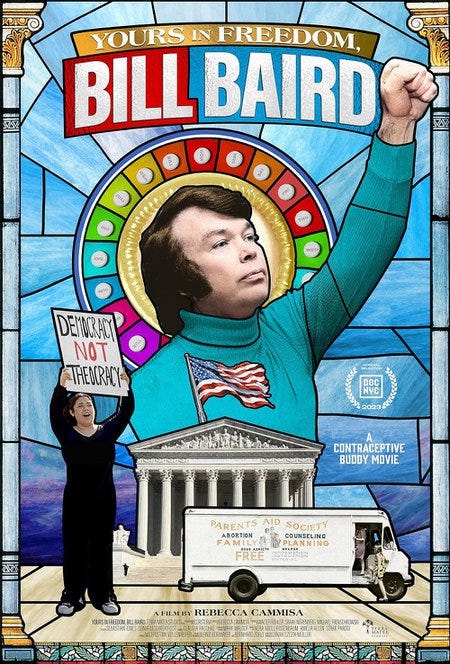
and which extended the birth control right to people who were unmarried.[12]
In preparing his opinion, Justice Blackmun reviewed decisions on state abortion laws in lower federal courts and state courts, from the successful challenge to California’s restrictive law in the state’s Supreme Court, to anti-abortion law professor Robert Byrn’s unsuccessful challenge to New York’s 1970 law, to the two different opinions from federal judges in Connecticut, one that opened the way to abortion access with no restrictions and another months later that permitted the state to criminalize abortions after fetal viability.[13] Justice Blackmun concluded from reading the cases that he was not stepping too far past the point already reached in the lower courts; “most” of the state and federal judges who heard challenges to state abortion laws, he wrote, “have agreed that the right of privacy . . . is broad enough to cover the abortion decision.”[14]
General public opinion was moving in the same direction as the positions of professionals. In November, 1970, the Gallup poll recorded 40% in favor of abortion in the first trimester, a new high. In October, 1971, a front-page story in the New York Times reported on a poll that found 50% of Americans favoring policies that left the decision to a woman and her physician.[15] On his copy of an August, 1972, report on a Gallup Poll finding that “64 per cent of the public and even a majority of Roman Catholics” believed “that the decision to have an abortion should be left solely to the woman and her doctor,” either Justice Blackmun or his clerks emphasized the data with heavy underlining.[16]
The Supreme Court majority surprised nearly everyone with its opinion in Roe v. Wade. Seven Supreme Court Justices, including five Republican appointees, three named by Richard Nixon, chose in Roe v. Wade to make abortion policy at the national rather than the state level. Their decision promised to reduce what by the early 1970s had become profound inequality from state to state, and by race and income, in access to medical care that could determine the course of one’s life.
Advocates for liberal abortion laws had built a mass base that created opportunities for women to tell the stories of their lives. They engaged in effective grassroots and insider tactics to earn legislative support, and they shifted overall public opinion and the elite opinion that mattered most in Supreme Court councils. Diverse, dogged, coalitions succeeded at overcoming ancient prejudices and conservative tactics to make the democratic system in a few states work for them.
It may appear in retrospect that the Supreme Court was in conflict with its times, but the Justices were followers as much as they were leaders. Members of the majority in Roe v. Wade ruled consistently with what seemed to them a new public consensus and particularly a consensus among professionals most immersed in the issue, those the Justices assumed knew best. Behind those changes in public and professional opinion was a loosely coordinated, multi-part movement that built attitudinal shifts and new policies from the foundations up.
[1] Letter from Justice Blackmun to Thomas E. Keys, c/o The Library, Mayo Clinic, Rochester, MN, December 17, 1971, and Blackmun to Keys, January 24, 1972, Blackmun, Box 152/ Folder 2; Greenhouse, Becoming Justice Blackmun, location 333.
[2] Jeffrey Toobin, “The People’s Choice,” The New Yorker, January 28, 2013, https://www.newyorker.com/magazine/2013/01/28/the-peoples-choice-2 [accessed February 13, 2022].
[3] Letter from Hadon Carryer, MD, Allergic Diseases and Internal Medicine, Mayo Clinic, Rochester, MN, to Justice Harry Blackmun, Normandy House, Arlington, VA, September 14, 1972, Justice Blackmun papers, Library of Congress, Box 152/ Folder 2.
[4] Richard D. Lyons, “A.M.A. Eases Abortion Rules,” New York Times, June 26, 1970: 1.
[5] Roe v. Wade [410 U.S. 142-45] (1973).
[6] Excerpts, Deliberations of the American Medical Association House of Delegates, 1970, in [Blackmun clerks], “AMA Stuff/ ‘1969—Resolved that the present policy of the AMA on abortion be rescinded…’,” Blackmun, Box 152/ Folder 5.
[7] “the logistic and” Excerpts, Reference Committee Report, American Medical Association Meeting, 1970, “AMA Stuff,” Blackmun 152/5, with [Blackmun’s] hand-written check-marks.
[8] The American Public Roe v. Wade [410 U.S. 145-47] (1973).
[9] Ruth Cusack, Interview with David Garrow, June 25, 1993, Part I, cassette recording from David Garrow collection, transcript in possession of the author.
[10] Editorial, “Standards for Changing Practice in Abortion,” American Journal of Public Health, vol. 61 (February, 1971): 215-17, in Blackmun, Box 152/ Folder 5.
[11] American Bar Association, “Uniform Abortion Act” (1972), quoted at length in Roe v. Wade [410 U.S. 147] (1973), fn. #40.
[12] To be sure Griswold v. Connecticut [381 U.S. 479] (1965); United States v. Vuitch [402 U.S. 62] (1971); and Baird v. Eisenstadt [405 U.S. 438] (1972).
[13] People v. Belous [71 Cal.2d 954] (1969); Byrn v. New York City Health and Hospitals Corporation [31 N.Y. 2d 194] (1972); Abele v. Markle[342 F. Supp 800] (Conn., 1972); and Abele v. Markle [351 F. Supp. 224] (Conn. 1972).
[14] Roe v. Wade [410 U.S. 155].
[15] David Garrow, Liberty and Sexuality, 385, 513.
[16] Jack Rosenthal, “Survey Finds Majority, in Shift, Now Favors Liberalized Laws,” New York Times, August 25, 1972: 1, in Blackmun, Box 152/ Folder 5. The underlining appears to have been Justice Blackmun’s, but it may have been the work of a clerk who wanted him to notice the data in Rosenthal’s article.